"La situazione sta peggiorando. Gridate con noi che i diritti umani sono calpestati da persone che parlano in nome di Dio ma che non sanno nulla di Lui che è Amore, mentre loro agiscono spinti dal rancore e dall'odio.
Gridate: Oh! Signore, abbi misericordia dell'Uomo."

Mons. Shleimun Warduni
Baghdad, 19 luglio 2014

5 giugno 2008

Vescovo della chiesa Assira spiega il suo percorso verso la comunione con la Chiesa cattolica


Tradotto ed adattato da Baghdadhope

Il mese scorso il vescovo Mar Bawai Soro e quasi 1000 famiglie cristiane della chiesa Assira sono entrate in comunione con la chiesa cattolica Caldea in California. Monsignor Bawai ha spiegato l’accaduto alla CNA ed ha espresso la speranza che altre comunità appartenenti alla chiesa Assira prendano in considerazione l’unione con la chiesa cattolica.
La chiesa Assira, che ha il suo centro nell’attuale Iraq, risale ai primi tempi del cristianesimo. Attorno al quinto secolo, i fedeli assiri abbracciarono l'insegnamento di Nestorio, Arcivescovo di Costantinopoli, le cui dottrine furono condannate dal Concilio di Efeso nel 431. Tuttavia, all'inizio del XVI secolo, un gran numero di assiri nestoriani entrarono in unione con Roma creando la chiesa cattolica Caldea che ora ha più fedeli di quella assira.
Monsignor Soro ha descritto alla CNA il percorso che lo ha portato alla comunione con la chiesa cattolica: venti anni fa, molti fedeli della chiesa assira capirono che a parte il primato papale non vi erano questioni teologiche tra loro e la chiesa cattolica. Egli ha spiegato che “più studiavo la teologia cattolica più ero certo che entrambe le Chiese si basano fondamentalmente sulla stessa pratica e fede apostolica."
Il prelato assiro non fu l'unico a notare questa somiglianza. Soro ha ricordato infatti che "allo stesso tempo quella ipotesi fu esaminata nel corso dei dialoghi ufficiali tra la chiesa cattolica e quella assira, e dopo vent’anni la conclusione dei colloqui informali e dei dialoghi ufficiali fu che essa è corretta ".
Nel 2004 però il patriarca ed i vescovi "decisero di sospendere il dialogo con Roma" anche se "tutti gli ostacoli che avrebbero impedito di ristabilire la comunione con la chiesa cattolica (non includendo il primato papale)" furono dimostrati come inesistenti.
Monsignor Soro ha poi aggiunto che la reazione dei vescovi ci fu nonostante fosse stato riconosciuta la corrispondenza tra le due tradizioni: "sapevano bene che il patrimonio ecclesiale della Chiesa Assira d'Oriente - canonica, liturgica e patristica - riconosce il primato della Sede di Roma. Ma nonostante il fatto che questo sia stato il mio appello e ed il mio argomento di discussione con i capi della mia Chiesa per molti anni - essere fedeli alla vostra tradizione ed entrare in comunione con la chiesa cattolica, vale a dire accettare il primato del Papa - essi non ascoltarono".
Tanto che nel 2005 "decisero di interrompere il dialogo con Roma e di sospendermi dalla chiesa Assira. Così da quell’anno ho potuto riunire quei fedeli assiri che come me erano scontenti dell'atteggiamento della chiesa e far loro comprendere che il miglior passo da intraprendere sarebbe stato il ripristino della comunione con Roma. Negli ultimi due anni e mezzo, quindi, ci siamo progressivamente preparati allo storico passo dell’unione con la chiesa Caldea".
Monsignor Mar Bawai ha anche parlato della speranza che il resto della Chiesa Assira d'Oriente si unisca a Roma. In un'intervista a Terrasanta.net ha infatti dichiarato che sebbene l’unione sia possibile due fattori devono essere considerati: il tempo e l’impegno.
"Al momento il risentimento deve scomparire prima di iniziare un nuovo, realistico, percorso. Stiamo facendo tutto ciò che è umanamente possibile per rispondere con compassione e con la ragione a tutte le accuse e le condanne che alcuni gruppi ed individui assiri radicali ci stanno muovendo a causa della nostra unione con Roma. Speriamo che alla fine la verità di Dio e il messaggio di perdono del Suo amore prevalgano su tutte le sofferenze."
Per quanto riguarda l’impegno il vescovo ha sottolineato l'importanza di mostrare al mondo "che l'unità della Chiesa è un proposta vincente per tutte le parti" specialmente per i cristiani in Iraq. "Le comunità cristiane in Iraq hanno bisogno di aiuto e sostegno, ed attraverso tale unità, ad esempio, gli iracheni cristiani potrebbero diventare più determinati nel proprio impegno verso coloro che daranno la propria testimonianza cristiana, e promuovere il proprio contributo all’Iraq ".

Assyrian bishop explains his journey into communion with the Catholic Church

Source: Catholic News Agency

Last month, Bishop Mar Bawai Soro and nearly 1,000 Assyrian Christian families were received into communion with the Chaldean Catholic Church in California. Bishop Bawai explained the process to CNA, and expressed his hope that other Assyrian churches will also consider uniting with the Catholic Church.
The Assyrian Church, centered in modern-day Iraq, dates back to the earliest days of Christianity. Around the fifth century, the Assyrian followers began to embrace the teachings of Nestorius, Archbishop of Constantinople whose doctrines were condemned by the Council of Ephesus in 431.
However, at the beginning in the sixteenth century, large numbers of Nestorian Assyrians came into union with Rome, creating the Chaldean Catholic Church which is now larger than the Assyrian Church.
Bishop Soro described the process of coming into communion with the Catholic Church to CNA: Twenty years ago, many of the Assyrian church’s faithful realized that other than Papal Primacy, there were no theological issues that existed between themselves and the Catholic Church. He explained that, “the more I studied Catholic theology, the more I became certain that both Churches were basically of the same apostolic faith and practice.”
The Assyrian prelate wasn’t the only one who saw this similarity. Bishop Soro recalled that, “at the same time, this hypothesis was also pondered upon by the official dialogue between the Catholic Church and the Assyrian Church of the East. The conclusion after twenty years of casual ‘talks’ and official dialogue proved this hypothesis to be correct.”
However, in 2004 the patriarch and bishops “decided to suspend the dialogue with Rome” even though “all obstacles for restoring communion with the Catholic Church (Papal Primacy not included)” were proven not to exist.
Bishop Soro said that his fellow bishops’ rejection came despite a recognition that there was an agreement between the two traditions. He explained that, “they knew well that the ecclesial patrimony of the Assyrian Church of the East -- canonical, liturgical, and patristic -- recognizes the Primacy of the See of Rome. Despite the fact that this was my appeal and argument to my church leaders for many years - -be faithful to your tradition and enter the Catholic Communion, i.e., accept the Primacy of the Pope - - they did not listen.”
Instead, in 2005, “they decided both to break the dialogue with Rome and to suspend me from the Assyrian Church of the East. And so, since 2005, I have been able to rally those Assyrian faithful who became as discontent with their church’s attitude as I was and bring them to understand that the best step to be taken is the restoration of communion with Rome. In the past two and half years, we gradually paved the way for the historic move to unite with the Chaldean Church."
Bishop Bar Mawai also spoke of his hope for the rest of the Assyrian Church of the East to unite with Rome. In an interview with Terrasanta.net, the bishop stated that while there is a possibility for community, two factors must be considered: time and hard work.
The prelate explained: “At the present time, some of the anger has to melt away before any realistic attempt is reinitiated. We are doing all that is humanly possible to reply with compassion and reason to all the accusation and condemnations some of the radical Assyrian groups and individuals are directing at us because of our union with Rome. We hope that ultimately the truth of God’s work and the message of His forgiving love will prevail over all trials.”
In regards to the second factor, the bishop emphasizes the importance of showing the world, “that church unity is a win/win proposition,” especially for Christians in Iraq. “The Christian communities out there need all the help and support they can muster. And, through such unity, for example, Iraqi Christians become more assertive of their commitment to all that will give witness to their Christian character and advance their genuine contribution Iraq.”

3 giugno 2008

Website per Padre Ragheed

By Baghdadhope

Un sito web dedicato a Father Ragheed Kanni. Una collezione di foto, articoli e testimonianze in arabo ed inglese su
ragheed.net.

Photo by ragheed.net

Father Ragheed Kanni website

By Baghdadhope

A web site dedicated to Father Ragheed Kanni. A collection of photos, articles and testimonies in Arabic and English at ragheed.net.

Father Ragheed is the first on the right during the ceremony of his graduation at Civil Engineering University of Mosul.

Photo by ragheed.net


Iraq: Un anno fa l'assassinio di Padre Ganni. Il ricordo di Mons. Warduni

Fonte: SIR

“Lo hanno atteso fuori della chiesa. Lo hanno costretto a scendere dalla macchina e faccia al muro e lo hanno crivellato di colpi a sangue freddo”.
Ad un anno esatto dalla sua uccisione, così mons. Shlemon Warduni, vescovo ausiliare di Baghdad, ricorda al Sir la morte, avvenuta a Mosul, di padre Ragheed Ghanni, e di tre suoi suddiaconi. “Abbiamo sperato che potessero essere le ultime vittime dell’odio ma non è stato così. Ce ne sono state altre come quella di mons. Paulos F. Rahho, vescovo di Mosul e quindi dello stesso padre Ganni. Fu proprio mons. Rahho a celebrarne le esequie. A meno di un anno la stessa sorte è toccata a lui. E ricordiamo anche tutti gli altri sacerdoti e fedeli che hanno perso la loro vita e subito violenze”. “La Chiesa cattolica irachena sta diventando una chiesa di martiri – aggiunge mons. Warduni – ma non dobbiamo perdere la speranza. Il loro sangue possa portare frutti di pace e di sicurezza per tutto l’Iraq. L’esempio di questi martiri deve rafforzare la nostra fede. Per l’Iraq, ma anche per tutti gli altri Paesi della regione, l’esodo dei cristiani rappresenterebbe una sciagura”. Tuttavia, conclude, “in questi giorni la situazione è leggermente migliorata. Nel quartiere di Dora qualche famiglia cristiana è tornata. La strada della sicurezza è ancora lunga, il seminario e la vicina chiesa di san Giacomo sono state saccheggiate, ma la speranza ci sostiene”.

Iraq: One year ago the murder of Father Ganni. Mgr. Warduni's tribute

Source: SIR

“They waited for him out of the church. They forced him to get out of his car and, with his face turned to the wall, they cold-bloodedly riddled him with bullets”.
Exactly one year after his murder, mgr. Shlemon Warduni, auxiliary bishop of Baghdad, recalls with these words the death in Mosul of father Ragheed Ghanni, and three of his sub-deacons. “We hoped those could be the last victims of hatred, but that was not the case. There have been more, such as that of mgr. Paulos F. Rahho, bishop of Mosul, and then father Ganni. It was just mgr. Rahho who had celebrated his funeral. Less than one year later, the same fate fell on him. And we would also like to remember all the other priests and devotees who lost their lives or were abused”. “The Iraqi Catholic Church is becoming a church of martyrs – adds mgr. Warduni – but we must not lose hope. May their blood bring fruits of peace and security all over Iraq. The example of these martyrs must strengthen our faith. For Iraq, but also for all the other countries of the region, the exodus of Christians would be a catastrophe”. However, he concludes, “over these days the situation has slightly improved. In the Dora district, some Christian family have come back. The road to security is still long, the seminary and the nearby church of Saint James have been plundered, but hope supports us”.

Iraq: Mons. Sako (Kirkuk) "Da Stoccolma risultati mediocri"

Fonte: SIR

“Decisioni mediocri”
. A pochi giorni dalla conclusione mons. Louis Sako arcivescovo caldeo di Kirkuk, Iraq, è tornato sulla recente conferenza di Stoccolma sull’Iraq, dedicata alla valutazione dei risultati conseguiti in Iraq nei campi delle riforme economiche e del consolidamento delle istituzioni democratiche. “Gli iracheni si aspettavano molto da questo convegno ma, purtroppo, le decisioni sono state mediocri”, ha dichiarato al Sir, a margine della cerimonia del premio “Defensor Fidei” conferitogli il 31 maggio scorso dalla fondazione “Fides et Ratio” e dalla rivista “Il Timone”. "I Paesi arabi e islamici hanno interesse che l’Iraq rimanga nelle condizioni attuali, perciò non si sono impegnati ad aiutarlo per iniziare la vera ricostruzione sociale e economica – ha affermato il presule - che aiuterebbe tante persone a trovare un lavoro e ad abbandonare la violenza”. Per Sako “con la Conferenza abbiamo avuto la conferma che questi Stati, specie i più vicini all’Iraq, puntano a mantenere la propria influenza. Anche se un proverbio arabo dice: “Sostieni il tuo fratello opprimente o oppresso”, è evidente che intendono liquidare i propri conti a spese dell’Iraq. Gli altri Paesi vogliono lasciare gli Usa soli nell’affrontare la questione irachena, per questo non hanno voluto cancellare i debiti precedenti né offrire nuovi fondi e, così, la nostra Nazione rimane in una situazione immobile”.

Iraq: Mgr. Sako (Kirkuk) "Poor results from Stockholm"

Source: SIR

“Poor decisions”.
A few days after the ending, mgr. Louis Sako, Chaldeian archbishop of Kirkuk, Iraq, mentioned again the recent conference of Stockholm on Iraq, focussed on an assessment of the results achieved in Iraq in the area of economic reforms and the strengthening of democratic institutions. “The Iraqis expected a lot of this meeting, but unfortunately the decisions taken were poor”, stated to SIR, during the ceremony for the “Defensor Fidei” award that he was given on May 31st by the “Fides et Ratio” Foundation and by the magazine “Il Timone”. "The Arab and Islamic countries want Iraq to stay as it is, so they did not do anything to help it start any veritable social and economic reconstruction – stated the prelate – that would help so many people find a job and leave violence behind”. According to Sako, “the conference confirmed that these states, especially those closest to Iraq, aim at retaining their influence. Even if an Arab saying goes like this: “Support your brother, whether oppressing or oppressed”, it’s clear they want to settle their affairs to the detriment of Iraq. The other countries want to leave the US alone in facing the Iraqi question, that’s why they didn’t want to cancel the previous debts or offer new funds, so our country remains in a stationary state”.

2 giugno 2008

Padre Ragheed Kanni, 3 giugno 2007 Father Ragheed Kanni, June 3 2007

By Baghdadhope

Era il 3 giugno 2007 quando, a sangue freddo, con una vera e propria esecuzione, davanti alla chiesa del Santo Spirito di Mosul vennero uccisi un sacerdote caldeo, Padre Ragheed Ghanni, e tre suddiaconi che con lui avevano appena finito di celebrare la Santa Messa: Basman Yousef Daoud, Ghasan Bidawid e Wadid Hanna.
Ad un anno di distanza ricordiamo quei 4 giovani che la chiesa caldea, e con essa tutta la chiesa nel mondo, ricorda come martiri della Fede.
Lo facciamo pubblicando alcune foto. Quella di Padre Ragheed, quella della cerimonia funebre officiata a Karamles da Monsignor Faraj Paulus Rahho, il vescovo caldeo di Mosul che neanche ad una anno di distanza, a metà marzo del 2008, è stato ritrovato cadavere dopo il suo sequestro avvenuto il 29 di febbraio, e quelle di alcuni momenti delle esequie che ben descrivono la situazione della cristianità irachena: una guardia armata a rappresentare i pericoli che essa corre, ed una candela a simbolo della sua Fede e della speranza che la sta sostenendo in questi momenti bui.
Pubblichiamo anche un video di Youtube
in cui poter ascoltare lo stesso Padre Ragheed cantare un inno alla Vergine che, dal testo inglese pubblicato su Youtube, recita così:
“Ti onoriamo con i canti, o Madre Di Dio, orgoglio dell'intera terra, perché la Parola di Dio che il Padre inviò scelse di farsi uomo attraverso di te.
Le generazioni invocano te Benedetta, tutte le nazioni ed i popoli ti onorano e chiedono pietà con le preghiere a Te rivolte. Tu sei una terra generosa in cui sempre crescono le piante della gioia.”

It was June 3, 2007 when, in cold blood, during an execution, in front of the Church of the Holy Spirit in Mosul a Chaldean priest, Father Ragheed Kanni, and three subdeacons who had just finished to celebrate the Holy Mass with him: Basman Yousef Daoud, Ghasan Bidawid and Wadid Hanna, were killed. One year after we remember those four young boys who the Chaldean church, and with it the whole church in the world, recalls as martyrs of the Faith.
We do this by publishing some photos. That of Father Ragheed, that of the funeral ceremony officiated in Karamles by Mgr.Faraj Paulus Rahho, the Chaldean bishop of Mosul who, not even one year later, in mid-March 2008, was found dead after his kidnapping occurred on February 29, and those of two moments of the funeral ceremony that well describe the situation of Iraqi Christianity: an armed guard to represent the dangers that it runs and a candle as the symbol of its faith and of the hope that is supporting it in these dark moments.
We publish also a video by Youtube to listen to the same Father Ragheed singing a hymn to the Virgin that, from the English text published on Youtube, says:
“We honor you with hymns O Mother of God, you are the pride of the whole earth, because the Word of God whom the Father sent, chose to take His human body from you. The generations call you blessed, all nations and people's honor you and ask for mercy by your prayers. You are a generous earth in which plants of joy always grow.”


Vita a Mosul o a Baghdad.Ma... è vita?

By Baghdadhope

E’ di alcuni giorni fa un articolo pubblicato dall’AFP dedicato ai progressi che si starebbero verificando a Mosul a seguito delle operazioni militare tese a ripulirla dagli elementi terroristici che l’avevano resa uno dei maggiori poli della violenza nel paese. I progressi di cui si parla riguarderebbero la vita quotidiana afflitta da una serie di divieti e norme comportamentali cui la popolazione si è dovuta attenere – un rifiuto sarebbe equivalso alla morte – e che trovavano spiegazione, da parte di chi li imponeva, in una rigidissima e fanatica morale o nel rispetto degli usi e costumi in vigore al tempo del Profeta.
Così, a parte il prevedibile divieto di bere alcolici, che in passato si era sempre potuto eludere usando una certa “discrezione”, l’articolo cita quello di usare rasoi elettrici per i barbieri, di far sedere uomini e donne allo stesso tavolo per i ristoratori, persino di vendere il ghiaccio, sconosciuto nel XVII secolo. C’era poi il divieto che riguardava alcune verdure, nella fattispecie i pomodori ed i cetrioli, impossibili da mettere in esposizione sullo stesso banco per non suscitare pensieri di natura sessuale.
Questo divieto, basato sul presunto sesso delle verdure, appare tra tutti il più surreale. Per prima cosa esso presuppone un grado di perversione sessuale che certamente – se esiste - riguarda una minimissima percentuale della popolazione mondiale che certamente non risiede nella sua maggioranza a Mosul. Secondo perché è improbabile pensare che i suoi abitanti, insicuri di poter anche solo tornare a casa vivi dopo aver fatto la spesa, indugiassero in pensieri peccaminosi dal verdumaio.
Per quanto surreale però questo divieto esisteva, ed in alcune zone esiste ancora, ed è stato“causa della morte di molte donne che per esso sono state uccise senza pietà” come ha confermato da Baghdad a Baghdadhope la stessa fonte che già due anni fa aveva descritto tali divieti.
L’articolo dell’AFP, infatti, mi ha subito ricordato un
post analogo del giugno 2006. A quell’epoca il divieto riguardante le verdure non c’era ancora o la mia fonte aveva dimenticato di citarlo. Ce n’era un altro però altrettanto surreale che riguardava l’aria e le ruote di scorta:

Clicca su "leggi tutto" per il post "Vita a Baghdad. Ma... è vita? o vai direttamente al post consultando l'archivio del giugno 2006

venerdì, giugno 09, 2006
Vita a Baghdad. Ma... è vita?
By Baghdadhope

Parlo al telefono con un amico che vive a Baghdad. Mi sta raccontando le ultime novità. Se non fosse che so che non sta inventando e che a provarlo ci sono altre testimonianze simili, non crederei alle mie orecchie. Da tempo, ai problemi di una realtà assurda che insanguina Baghdad giornalmente molto più di quanto i nostri media ci dicono, se ne sono aggiunti altri che riguardano i comportamenti che la popolazione deve tenere, e che ben sono riportati da uno dei blogger iracheni. Secondo Zeyad, questo il nome del blogger, quelli che lui definisce "islamisti radicali" hanno ormai preso il controllo, totale o quasi, di molti quartieri di Baghdad in cui sono stati distribuiti dei volantini riportanti i codici di comportamento da tenere. I volantini però non sono uguali da quartiere a quartiere, e mentre in quelli di Ghazaliya ed Adhamiya contengono molte direttive, in altri alcune sono mancanti, una situazione che rende la cosa ancor più surreale, se possibile. Come regolarsi? * (vedi nota)
Proviamo ad immaginare di vivere con queste regole: se siamo donne dovremo adeguarci ad usare il velo che copre il capo ogni volta che usciamo di casa, e questo anche se, come cristiane, questa pratica non è nelle nostre tradizioni. Non potremo guidare e meno che mai usare il cellulare in pubblico, una pratica considerata disdicevole. Se siamo uomini saremo obbligati ad indossare pantaloni lunghi a patto che non siano blue jeans, a non tagliarci la barba, a non portare il "pizzetto," a non mettere il gel sui capelli, a non portare collanine nè camicie troppo colorate. A questi divieti/imposizioni che riguardano separatamente i due sessi, si aggiungono quelli che riguardano tutti, alcuni dei quali di difficile interpretazione: è vietato vendere ghiaccio, sigarette per strada, prodotti di origine iraniana, giornali, Cd e DVD. Gli spazzini non possono raccogliere la spazzatura in alcune aree, ed in alcune altre è proibito possedere un generatore elettrico.
I macellai non possono macellare in particolari date legate ad anniversari religiosi e, come poteva mancare? gli Internet Cafè sono minacciati. Zeyad fa notare di non essere stato in grado di trovare uno di questi volantini di "istruzioni" ma che, anche se si trattasse della classica "leggenda metropolitana," gli assassinii legati al non rispetto delle regole sono reali, e comunque nel dubbio è più prudente adeguarsi alle nuove regole. Molte volte, infatti, la paura è peggiore della realtà. Mi viene da pensare alla faccenda dei telefoni sotto controllo nell'Iraq di Saddam Hussein. Fino alla caduta del regime non c'era iracheno che non si dicesse o non fosse sicuro di avere il telefono sotto controllo, e questo portava a delle conversazioni bizarre fatte di frasi in codice e di prontezza nel raccogliere o nel dare l'informazione voluta ma camuffata. Ebbene, per quanto il controllo del regime fosse effettivamente diffuso, non penso che si potesse arrivare ad un controllo "effettivo" di "tutti" i telefoni del paese, e d'altro canto non sarebbe stato necessario: la paura creava una sorta di "autocensura" che garantiva il massimo del risultato con il minimo investimento. Ma torniamo alle regole ed alla mia conversazione con l'amico di Baghdad.
"Vuoi sapere l'ultima regola?"
"Dai, dimmi"
"Non si può portare la ruota di scorta in macchina"
Perché?
Chiedo, dandomi mentalmente la risposta che riguarda la possibilità di nascondervi dell'esplosivo.
"Perché se porti la ruota di scorta dimostri di non aver abbastanza fiducia in Dio. Se ne avessi sapresti che se sarà volere di Dio tu non ne avrai bisogno"
"??????????????"
"E poi qualcuno da anche un'altra spiegazione.."
"??????????????"
"Non puoi portare la ruota di scorta perché l'aria in essa contenuta non è tua, ma di Dio"
"E l'aria che è dentro le altre quattro ruote di chi è?"

Risata. "E chi lo sa?"
Questa è la vita a Baghdad, ma... è vita?
A questo proposito voglio citare altri due scampoli di conversazione esplicativi di una situazione che difficilmente si riesce persino solo ad immaginare, e che ha diffuso tra gli iracheni fatalismo, saggezza, rassegnazione ed anche una sorta di umorismo nero utile alla sopravvivenza mentale.
Si parlava della dose di violenza quotidiana:
Io: "non so proprio come facciate a vivere.."
Risposta: "e chi ti dice che siamo vivi?"
Si parlava della cronica mancanza di elettricità in una città in cui ormai di giorno ci sono 50 gradi centigradi:
Io: "..se solo fosse possibile installare dei pannelli solari non dovreste più dipendere da nessuno con il sole che avete..."
Risposta: "se avessimo i pannelli solari qualcuno farebbe saltare in aria il sole con una bomba!"
* Non cè link diretto all'articolo di Zeyad "7th century Baghdad" che può però essere trovato consultando l'archivio del giugno 2006 di healingiraqblogspot.

Life in Mosul or Baghdad. But... is it life?

By Baghdadhope

Some days ago AFP agency published an article about the progresses in Mosul as the result of the military operations aimed at cleaning the city by terrorist elements who made of it one of the major poles of violence in the country.
The progresses mentioned concern everyday life plagued by a series of prohibitions and standards of behaviour the population had to stick to - a refusal would mean death – and that found their explanation, by those imposing them, in a strict and fanatical moral or in the respect of the habits and customs in force at the time of the Prophet. Thus, apart from the expected ban on drinking alcohol, in the past always eluded by the use of a certain "discretion", the article cites using electric shavers for barbers, seating men and women at the same table for restaurateurs, even selling ice, unknown in the VII century. There was also a prohibition concerning some vegetables, particularly tomatoes and cucumbers, that could not be put on display on the same stall not to stir up thoughts of sexual nature. This prohibition, based on the alleged sex of the vegetables, appears among the others the more surreal. First, it requires a degree of sexual perversion that certainly - if exists - concerns a tiny percentage of the world population the majority of which certainly does not live in Mosul. Secondly because it is unlikely to think that Mosul citizens, insecure if they could even return home alive after their shopping, would linger in sinful houghts at the greengrocer.
As surreal it can appear this prohibition existed, and in some areas still exists, and was the "cause of death of many women who for it were killed mercilessly" as confirmed from Baghdad to Baghdadhope by the same source who already two years ago had described such prohibitions.
The Article by AFP, in fact, immediately reminded me of a post of June 2006. At that time the prohibition on vegetables was not imposed or my source had forgotten to mention it. But there was another one equally surreal involving air and spare tyres:

Click on "leggi tutto" for the English text of the June 2006 post: "Life in Baghdad.. but is it life"?

Friday, June 09, 2006
Life in Baghdad. But ... is it life?
By Baghdadhope
I speak on the phone with a friend who lives in Baghdad. He is telling me about the latest news. If I didnt’t know that he is not inventing and that there are other similar testimonies, I wouldn’t believe to my ears. Since some time now, to the problems of an absurd reality that bathe Baghdad in blood daily, and much more of what our media tell us, others have been added relating to the behaviours people must stick to and that are reported by an Iraqi blogger. According to Zeyad, this is the name of the blogger, those he calls "radical Islamists" have now taken control, total or partial, of many neighborhoods of Baghdad where leaflets reporting the codes of conduct to keep were distributed. The flyers are not equal in all the districts, and while those circulating in Ghazaliya and Adhamiya contain many directives, in other areas they did not appear, a situation that makes things even more surreal, if possible. * (see the footnote)
How to know to behave?
Let’s try to imagine living according these rules: if we are women we have to use the veil covering our head whenever we leave home, and that although, as Christian, this practice is not in our traditions. We cannot drive and less than ever use mobiles in public, a practice considered as unbecoming. If we are men we will be obliged to wear long trousers, provided that they are not blue jeans, not to shave, not to have pointed beard, not to use hair gel, necklaces or colored shirts. To these prohibitions/impositions concerning the two sexes, are added those concerning all, some of which of difficult interpretation: it is forbidden to sell ice, cigarettes on the street, products of Iranian origin, newspapers, CD and DVD. The street cleaners cannot collect the garbage in some areas and in certain other is prohibited to have an electric generator.
Butchers cannot slaughter in specific dates linked to religion and, could it be missing? Internet Cafe are threatened. Zeyad points out he was not able to find one of these flyers of "instructions" but that, even if it were the classic "urban legend," the murders linked to non-compliance with the rules are real, but that it is in any case more prudent to stick to the new rules. Many times,in fact, fear is worse than reality. I think to the telephones under control in Saddam Hussein’s Iraq. Until the fall of Iraqi regime every Iraqi reported, or was convinced of, to have the phone under control, and this led to bizarre conversations made of code phrases and readiness in collecting or giving the desired but disguised piece of information. Well, even if the control system was in fact widespread, I do not think it meant an "effective" control of "all" thephones in the country, and on the other hand it would not have been necessary: fear created a sort of "self-censorship" that ensured maximum results with minimal investment.
But let’s return to the rules and to my conversation with my friend in Baghdad.
"Do you want to know the last rule?"
"Come on, tell me"
"You can’t carry the spare tyre when you go around by car"
"Why?" I ask, mentally giving myself the answer concerning the possibility of hiding explosive in it.
"Because if you have the spare tyre it means you don’t have enough confidence in God. If you had it you would know that if it is the will of God you don’t need it"
"??????????????"
"And someone gives another explanation"
"??????????????"
"You can’t carry the spare tyre because the air contained in it is not yours, but of God"
"And whose the air inside the other four wheels?"
A laugh. "Who knows?"
This is life in Baghdad, but ... is it life? In this regard I wish to mention two other pieces of conversation explaining a situation so difficult that is hard even to imagine, and that spread among Iraqis fatalism, wisdom, resignation and even a sort of black humor useful to their mental survival.
We were talking about the daily dose of violence:
Me: “I don’t know how you can live...”
Answer: “How you can say that we 'are' living?"
We were talking about the chronic lack of electricity in a city where during the day the temperature is of 50 degrees centigrade:
Me: "If you could install solar panels you should no longer depend on anyone considering the sun..."
Answer: "If we had solar panels someone would set off the sun by a bomb!"
* There is no direct link to Zeyad's post but it is possible to find it linking to healingiraqblogspot.com and to June 1 2006 post "7th century Baghdad"

1 giugno 2008

Mons. Louis Sako: Non abbandonate i cristiani irakeni

Fonte: Asia News

Non lasciateci soli. Non lasciateci isolati e abbandonati”: è l’appello a tutti i cristiani del mondo lanciato da mons. Louis Sako, arcivescovo caldeo di Kirkuk, che stamane a Oreno di Vimercate (Milano), ha ricevuto il premio “Defensor Fidei” dalla Fondazione “Fides et Ratio” e dalla rivista “Il Timone”. Il premio consiste nel dono di 10 mila euro.
Nel suo appassionato discorso (*) egli ha ricordato “il mortale esodo” dei cristiani irakeni, che fuggono il Paese, costretti da insicurezza, miseria e “pulizia etnico-religiosa” svolta da gruppi fondamentalisti.
“Ci sono 100mila rifugiati in Siria – ha detto l’arcivescovo - 30mila in Giordania, molte migliaia in Libano, Egitto e Turchia. Sanno che il loro soggiorno non può essere che provvisorio e la prospettiva del ritorno a casa sembra un sogno. Sono disperati. Molti altri, soprattutto i più poveri, si rifugiano nella regione curda, a nord, che erano stati costretti ad abbandonare dal regime di Saddam. Il governo curdo, grazie alla preoccupazione del ministro delle Finanza, che è un cristiano, ha ricostruito le loro case nei loro villaggi, ma mancano di strutture sanitarie, scuole e lavoro. Nei villaggi della piana di Ninive vivono 7mila famiglie emigrate da Mosul, Baghdad, Bassora. L’affitto è caro, molti giovani non possono frequentare le scuole o l’università”.
Ricordando il sacrificio di mons. Paul Faraj Rahho, morto dopo essere stato rapito lo scorso febbraio, e di tanti sacerdoti e fedeli irakeni, mons. Sako ha domandato ai cristiani occidentali di “prendere coscienza della gravità della… tragedia e con l’aiuto diplomatico e politico concentrarsi sugli Stati Uniti, il governo iracheno ed anche sugli Stati che danno sostegno alla islamizzazione dell’Iraq, per far rispettare la dignità delle persone e le libertà fondamentali e per fermare le persecuzioni e la pulizia etnica”.
L’arcivescovo ha ribadito che i cristiani irakeni “sono una delle componenti più antiche della popolazione irachena. Fin dall’inizio si sono fusi con altre realtà come gli arabi, i curdi, i turcomanni e gli yezidi; hanno fatto da pionieri nella civilizzazione dell’Iraq. Inoltre hanno sempre difeso l’integrità del Paese in modo coraggioso insieme ai loro fratelli musulmani”.
“Purtroppo – ha continuato - in questi ultimi tempi i cristiani sono presi di mira come un capro espiatorio, da sfruttare o da eliminare. I cristiani in certe zone dell’Iraq soffrono per emigrazione, stupri, rapimenti e pagamenti di riscatti, minacce e uccisioni perpetrate con moventi religiosi. Questo comportamento inusuale contraddice i valori umanitari del popolo iracheno e quelli morali della religione islamica. È necessario capire che un Iraq senza cristiani sarà disastroso per tutti gli iracheni!... Costringere i cristiani alla fuga porta al deterioramento del concetto di coesistenza e alla distruzione culturale”.
Mons. Sako ha concluso il suo intervento domandando alle Chiese nel mondo di aiutare i cristiani irakeni a rimanere nel Paese, offrendo dei “segni di speranza”: “La Chiesa può fare qualche cosa, aiutandoci non solo a parole, ma concretamente per restare nel nostro Paese. La priorità va data all’apertura di scuole e istituti professionali, anche di infermieri; alla messa in opera di piccoli progetti agricoli e di organizzazioni economiche e sanitarie”.
(*) Il discorso sarà pubblicato integralmente nel mensile cartaceo di AsiaNews di giugno - luglio 2008.

Archbishop Louis Sako: Do not abandon Iraqi Christians

Source: Asia News

"Do not leave us alone. Do not leave us isolated and abandoned"
: this is the appeal to all Christians of the world issued by Louis Sako, the Chaldean archbishop of Kirkuk, who this morning in Oreno di Vimercate (Milan) received the prize "Defensor Fidei" from the foundation "Fides et Ratio" and from the magazine "Il Timone". The prize is accompanied by an award of 10,000 euros.
In his impassioned speech (*), the archbishop recalled "the terminal exodus" of the Iraqi Christians, who are fleeing the country under the pressure of lack of security, misery, and "ethnic-religious cleansing" carried out by fundamentalist groups.
"There are 100,000 refugees in Syria", the archbishop said, "30,000 in Jordan, many thousands in Lebanon, Egypt, and Turkey. They know that their situation is temporary, and the prospect of returning home seems like a dream. They are desperate. Many others, especially the poorest, have taken refuge in the Kurdish region in the north, which they had been forced to leave by Saddam's regime. The Kurdish government, thanks to the concern of the finance minister, who is a Christian, has rebuilt their homes in their villages, but they lack sanitary structures, schools, and work. In the villages of the plain of Nineveh, 7,000 families live who have emigrated from Mosul, Baghdad, Basra. Rent prices are high, and many young people are unable to attend school or university".
Recalling the sacrifice of Archbishop Paul Faraj Rahho, who died after being kidnapped last February, and of many Iraqi priests and faithful, Archbishop Sako asked western Christians to "take stock of the seriousness of this . . . tragedy, and apply diplomatic and political pressure to the United States, the Iraqi government, and also to the countries that support the Islamisation of Iraq, in order to guarantee the respect of personal dignity and fundamental freedoms, and to stop the persecution and ethnic cleansing".
The archbishop stressed that Iraqi Christians "are one of the most ancient components of the Iraqi population. Since the beginning, they have blended with other groups, like the Arabs, Kurds, Turkmen, and Yazidi; they were the pioneers of Iraqi civilisation. Moreover, they have always defended the unity of the country in a courageous way, together with their Muslim brothers".
"Unfortunately"
, he continued, "recently the Christians have been singled out as scapegoats, to be exploited or eliminated. In some areas of Iraq, Christians suffer through emigration, rape, kidnapping, extortion, threats and killings carried out with religious motivations. This aberrant behaviour contradicts the humanitarian values of the Iraqi people, and the moral values of the Islamic religion. It must be understood that an Iraq without Christians would be disastrous for all Iraqis! . . . Forcing Christians to flee leads to the deterioration of the concept of coexistence, and to cultural destruction".
Archbishop Sako concluded his speech by asking the Churches of the world to help the Iraqi Christians stay in the country, offering "signs of hope": "The Church is capable of acting, helping us to remain in the country not only through words, but concretely. Priority must be given to the opening of schools and professional institutes, as well as clinics; to the creation of little agricultural projects and economic and sanitary organisations".
(*) The speech will be published in its entirety in the printed monthly publication of AsiaNews for June-July 2008.

30 maggio 2008

Incontro di Stoccolma: Warduni e Najim

Fonte: SIR
IRAQ: STOCCOLMA. PADRE P.NAJIM, “OGGI INCONTRO CON AL MALIKI”. APPELLO PER I RIFUGIATI
Una delegazione di cristiani iracheni, rifugiati in Svezia, incontrerà stasera, a Stoccolma, il premier Nouri al-Maliki. A rivelarlo al Sir è padre Philip Najim, procuratore caldeo presso la Santa Sede e visitatore apostolico in Europa, in questi giorni proprio in missione Svezia. A guidare la delegazione cristiana sarà lo stesso mons. Najim che al Sir anticipa le richieste che saranno avanzate al capo del Governo dell’Iraq: “al premier ribadiremo, innanzitutto, l’impegno della Chiesa cattolica a favore della crescita, della stabilità e della riconciliazione nel Paese. Ma è necessario che i cristiani vengano garantiti nei loro diritti e nella loro sicurezza”. “In Iraq – aggiunge Najim riferendosi anche alla Conferenza appena conclusa - la situazione resta drammatica, nonostante i tanti sforzi compiuti. Oggi, a cinque anni dalla guerra, popolazione irachena non ha ancora acqua, energia elettrica, infrastrutture, lavoro. Ben venga allora l’aiuto della comunità internazionale ma anche l’Iraq deve aumentare i suoi sforzi. Il nostro è un Paese ricco di risorse come il petrolio. E’ urgente che i proventi che derivano dalla sua vendita ricadano beneficamente su tutta la popolazione, servono investimenti che diano ragione dell’utilizzo di questi proventi”.
Secondo il procuratore caldeo, infatti, “il miglioramento delle condizioni di vita, così come della sicurezza, aiutano alla costruzione della pace e della stabilità. Lavoro e sicurezza riportano fiducia nella gente che non è più spinta ad emigrare anzi al contrario tende a tornare”. Quello dei rifugiati è un nervo scoperto per l’Iraq: “non mi risulta che si sia parlato dei rifugiati alla conferenza – dichiara mons. Najim - qui in Svezia dal 2003 ad oggi sono arrivati almeno 40mila iracheni, quasi la metà sono cristiani. Per fuggire dalle minacce hanno venduto tutto. Tutti gli iracheni, non solo cristiani, rifugiati all’estero sono legati al loro Paese e tornerebbero se ci fossero le condizioni per farlo. Intanto però andrebbero garantiti loro tutti i diritti fondamentali. Chiedo alla Svezia di continuare l’opera di accoglienza dei rifugiati iracheni e allo stesso tempo lo chiedo a tutti i Paesi europei. Garantire accoglienza agli iracheni in attesa che nel Paese d’origine vengano ristabilite sicurezza e stabilità, condizioni ideali per rientrare. Non vogliamo svuotare l’Iraq della sua gente e in particolare dei cristiani. Ricostruire significa permettere alla popolazione tutta, senza distinzioni di etnie e religione, di restare e a chi è andato via di tornare. Qui è in gioco il futuro del Paese. "
IRAQ: CONFERENZA STOCCOLMA. MONS.WARDUNI (BAGHDAD), “NON PROMESSE MA FATTI CONCRETI”
“Facciamo nostra ogni cosa che serve al bene e al progresso dell’Iraq. Oggi più che mai il Paese ha bisogno di sicurezza e stabilità”. Così mons. Shlemon Warduni, vescovo ausiliare di Baghdad, commenta al Sir l’esito della prima Conferenza internazionale di verifica del patto per l’Iraq che si è chiusa ieri sera a Stoccolma. “Incoraggiamo con tutto il cuore ogni decisione che abbia come scopo la crescita e la stabilità dell’Iraq” ribadisce il presule al quale non bastano gli elogi della comunità internazionale piovuti sul Governo per gli sforzi fatti nel campo della sicurezza, dell’economia e dell’ordine pubblico con la lotta al terrorismo. “Le promesse non bastano. Servono fatti e aiuti concreti da parte della comunità internazionale a tutto il popolo iracheno” dichiara il presule senza, tuttavia, entrare nel merito degli appelli lanciati dal premier Nouri al-Maliki per la cancellazione del debito estero che pesa come una zavorra sulla rinascita irachena.

29 maggio 2008

Fr. Paul Rabban: Chaldean Mass in Stockholm on the eve of the conference about Iraq

Interview to Fr. Paul Rabban by Baghdadhope

It will begin this morning in Stockholm the Iraq Annual Review Conference dedicated to evaluating the results achieved in Iraq in the fields of economic reforms and consolidation of democratic institutions a year after the birth of the International Compact with Iraq, a five-year plan of development of the middle-eastern country.
Another topic under discussion will be, however, that of the Iraqi refugees who are now present in tens of thousands in the Nordic country. Just about the problem of refugees spoke in recent days both the Swedish Prime Minister, Fredrik Reinfeldt, and Anders Lago, the mayor of Sodertalje, the town that more than others was ready to accept tens of thousands of them. Both defined as "unfair" the fact that Sweden has to bear the greatest weight of this biblical exodus, and the Prime Minister said he wants to address the issue with U.S. Secretary of State Condoleeza Rice who will attend the conference as, while Sweden – that did not participate in the conflict of 2003 - accepted at least 40000 Iraqis since that year, the United States have welcomed 1600 of them in the 2007 fiscal year, and are willing to accept only other 12000 for that of 2008, even if in the first four months only 1332 permits were released.
An obvious disproportion that certainly will be discussed in Stockholm from where comes the request - already done in the past – to the European Union to intervene to share the weight that Sweden is bearing.
The refugees issue concerns particularly the Iraqi Christian community since to it belong many of the people who in recent years fled from the native country, reaching those who arrived in the Scandinavian one decades ago because of wars, dictatorship and embargo.
A community not without problems that finds in its co-religionists already living in Sweden, but also in the churches, valuable points of reference not only to the processes of social integration, but also to the preservation of the sense of entity, although in diaspora.
Within this community a substantial number of people belongs to the Chaldean Catholic Church that in Sweden has three main centres of reference and three priests who guide them: Father Samir Dawood, Father Maher Malko and Father Paul Rabban.
And it is Father Paul Rabban, priest of the Chaldean community of Eskilstuna, west of Stockholm, who told to Baghdadhope about the Chaldean Rite Mass that yesterday was celebrated by Mgr. Philip Najim, Procurator of the Chaldean Church to the Holy See and Apostolic Visitor in Europe, in the Catholic Cathedral of Saint Eric in Stockholm. The ceremony was attended by the Apostolic Nuncio to the Scandinavian countries, Mgr. Paul Tscherrig, by the bishop of Stockholm, the only Roman Catholic diocese in the country, Mgr. Anders Arborelius, by three Chaldean priests, Fr. Paul Rabban, Fr. Maher Malko and Fr. Fadi Isho, a monk, by a Swedish priest, by the chaplain of the cathedral, a syro malabar rite Indian priest, and by the responsible for the eastern Christians in Sweden, the byzantine rite Archimandrite Fr. Mathias Graham.
Father Paul Rabban said that the Mass held on the eve of today's conference was devoted to prayer to the Lord to enlighten the minds and the hearts of the participants to act for the good of everyone, not only of Iraqis, and to put aside selfish interests and work together for peace. Peace which was evoked by Mgr. Paul Tscherrig who reminded how it is in the thoughts and prayers of Pope Benedict XVI who always asked it for the tormented land of Iraq. And precisely on the situation in Iraq, and on one of its most damaging effects - the flight from the country – was focused the speech of Mgr. Anders Arborelius who stressed how much Sweden is touched by it, both from a human point of view and for the practical implications that such a conspicuous emigration in such a short period of time has created. Mgr. Philip Najim dedicated his words to the suffering of Iraqi Christians that even if huge will not be the cause of the dissolution of the community in the homeland because, like other times in the past, it will prove stronger than the adversities. "Iraqi Christians" said Mgr.Najim "are not afraid even if history repeats itself, but strongly ask to fight terrorism and that every effort be done to restore peace in Iraq." A peace that, if we look back, no inhabitant of that country recalls if not linked to short periods.
With regard to the conference it is surprising that, although the issue of refugees if not on the agenda is at least an important one, no representative, - secular or religious – of the Iraqi community in Sweden has been invited. By now, according to unofficial reports, we know only that after the official meetings the Iraqi Prime Minister, Nuri Al Maliki, could meet some Iraqis who live in the country, maybe also a group of representatives of the Christian community.

Padre Paul Rabban: Messa caldea a Stoccolma alla vigilia della conferenza sull'Iraq

Intervista a Padre Paul Rabban di Baghdadhope

Si apre stamani a Stoccolma la Iraq Annual Review Conference dedicata alla valutazione dei risultati conseguiti in Iraq nei campi delle riforme economiche e del consolidamento delle istituzioni democratiche ad un anno dall’adozione dell’International Compact with Iraq, un piano quinquennale di sviluppo del paese mediorentale.
Un altro argomento in discussione saranno però i rifugiati iracheni che nel paese nordico sono ormai presenti a decine di migliaia. Proprio del problema dei rifugiati hanno infatti parlato negli scorsi giorni sia il Primo Ministro Svedese, Fredrik Reinfeldt, sia Anders Lago, il sindaco di Sodertalje, la cittadina che più di altre si è in questi anni dimostrata pronta ad accogliere decine di migliaia di disperati. Entrambi hanno definito come “ingiusto” il fatto che sia la Svezia a sopportare il maggior peso di questo esodo biblico, ed il Primo Ministro ha dichiarato di voler affrontare l’argomento con il Segretario di Stato americano Condoleeza Rice che sarà presente alla conferenza visto che, mentre la Svezia – che non ha partecipato al conflitto del 2003 – ha accolto almeno 40000 iracheni da quell’anno, gli Stati Uniti ne hanno accolti 1600 nel corso dell’anno fiscale 2007 e si sono dichiarati disponibili ad accoglierne solo 12000 per quello 2008, anche se nei primi quattro mesi sono stati rilasciati solo 1332 permessi. Un’ evidente sproporzione che certamente sarà dibattuta a Stoccolma da dove arriverà anche la richiesta – già fatta in passato – all’Unione Europea di intervenire per dividere il peso che la Svezia sta sostenendo.
L’argomento rifugiati tocca particolarmente la comunità irachena cristiana visto che proprio ad essa appartengono moltissime persone fuggite in questi anni dal paese natio che si sono aggiunte a quelle arrivate nel paese scandinavo
già da decenni a causa delle guerre, dell’embargo e della dittatura.
Una comunità non priva di problemi che trova nei correligionari già presenti sul territorio svedese, ma anche nelle chiese, dei preziosi punti di riferimento non solo per i processi di integrazione sociale quanto anche per mantenere il senso stesso di entità comunitaria anche se in diaspora.
All’interno di questa comunità un numero cospicuo di persone appartiene alla Chiesa Cattolica Caldea che in Svezia ha tre centri di riferimento principali e tre sacerdoti che li guidano: Padre Samir Dawood, Padre Maher Malko e Padre Paul Rabban.
E’ proprio Padre Paul Rabban, sacerdote della comunità caldea di Eskilstuna, ad ovest di Stoccolma, a raccontare a Baghdadhope della Santa Messa in rito caldeo presieduta da Monsignor Philip Najim, Procuratore della Chiesa Caldea presso la Santa Sede e Visitatore Apostolico in Europa, che ieri si è tenuta nella cattedrale cattolica di Saint Eric a Stoccolma. Alla cerimonia hanno partecipato il Nunzio Apostolico per i paesi scandinavi, Monsignor Paul Tscherrig, il vescovo dell’unica diocesi cattolica romana nel paese, quella di Stoccolma, Monsignor Anders Arborelius, tre sacerdoti caldei che risiedono in Svezia: Padre Paul Rabban, Padre Maher Malko ed il monaco Padre Fadi Esho, un sacerdote svedese, un indiano di rito siro mala barese che è il cappellano della stessa cattedrale, ed il responsabile per i cristiani orientali in Svezia, l’Archimandrita di rito bizantino Padre Mathias Graham.
Padre Paul Rabban ha raccontato a Baghdadhope come la Santa Messa tenuta alla vigilia della conferenza di domani sia stata dedicata alla preghiera rivolta al Signore perché illumini le menti ed i cuori dei partecipanti affinché agiscano per il bene di tutti, non solo degli iracheni, e perché mettano da parte gli interessi particolari e collaborino per la pace.
Pace che è stata evocata da Monsignor Paul Tscherrig che ha ricordato quanto essa sia nei pensieri e nelle preghiere di Papa Benedetto XVI che sempre l’ha invocata per la martoriata terra irachena. E proprio sulla situazione in Iraq, e su uno dei suoi effetti più nefasti – la fuga dal paese – si è incentrato il discorso di Monsignor Anders Arborelius che ha sottolineato come la Svezia sia da esso toccato, sia dal punto di vista umano, sia per i risvolti pratici che un’emigrazione così cospicua in un così breve lasso di tempo ha creato. Monsignor Philip Najim ha invece dedicato le sue parole alle sofferenze degli iracheni cristiani che per quanto enormi non saranno la causa del dissolvimento della comunità in patria perché, come le altre volte in passato, essa si dimostrerà più forte delle avversità. “Gli iracheni cristiani” ha detto Monsignor Najim “non hanno paura anche se la storia si ripete, ma chiedono fortemente che venga combattuto il terrorismo e che ogni sforzo si compia perché in Iraq ritorni la pace.”
Una pace che, a guardare indietro nel tempo, nessun abitante di quel paese ricorda se non legata a brevi periodi.
Per quanto riguarda la conferenza di domani stupisce come, pur essendo il tema dei rifugiati se non in agenda perlomeno importante, nessun rappresentante, - laico o religioso – della comunità irachena in Svezia sia stato invitato.
Per ora, secondo notizie ufficiose, si sa solo che una volta terminati i lavori il Primo Ministro iracheno Nuri Al Maliki potrebbe incontrare alcuni iracheni che vivono nel paese, si dice anche un gruppo di rappresentanti della comunità cristiana.

28 maggio 2008

Papaveri da oppio sulle rive del'Eufrate

By Baghdadhope

Secondo il Ministero della Salute iracheno il consumo di droga in Iraq sta vertiginosamente crescendo. Malgrado la difficoltà nello stilare statistiche precise i casi sono passati da 3000 nel 2004 a 7000 nel 2008.
Secondo i dati forniti dalle strutture sanitarie 3 giovani sui dieci tra i 18 ed i 30 anni sono tossicodipendenti. L’ospedale Ibn Rashid di Baghdad, ad esempio, ha rivelato che il consumo di droga è ormai triplicato ed è praticato anche da ragazzi di soli 14 anni. Ad aver registrato il più alto numero di decessi legato al consumo di stupefacenti sono le province centro meridionali di Maydan, Karbala, Babel, Wasit, e la zona della capitale dove sono ormai molte le testimonianze di spaccio e consumo alla luce del sole, un fenomeno da tutti riconosciuto come inesistente ai tempi del passato regime ma che ebbe un forte sviluppo nei mesi successivi alla sua caduta. Nel 2003 la polizia irachena scoprì un tentativo di importare due tonnellate di hashish ed eroina nelle province meridionali di Najaf, Karbala, Hilla e Bassora, e nel 2004 335 Kg. di droga furono sequestrati ad Amarah, la capitale del governatorato di Maysan. Il fenomeno del commercio di stupefacenti si considera legato a quello delle frontiere irachene lasciate incustodite ed al massiccio afflusso di di pellegrini provenienti dall’Iran che in questi anni hanno visitato i luoghi santi della tradizione sciita: Najaf, Karbala e Kufa. Tutte città che si trovano nei governatorati più colpiti.
Ma la droga in Iraq non circola solo perchè importata dall’estero. Il sito Al Jeraan.net infatti fa riferimento ad un articolo di The Indipendent che, citando fonti locali, riporta come, malgrado qualche difficoltà legata al clima, alcuni contadini delle province meridionali, allettati da un possibile maggior guadagno, stiano sostituendo le coltivazioni di riso con quelle di papavero da oppio.
L’Iraq, sempre secondo l’Indipendent, era già da tempo un paese in cui, con la complicità dei servizi di sicurezza del regime di Saddam Hussein, la droga prodotta in Afghanistan arrivava attraverso l’Iran per raggiungere gli altri mercati.
La differenza sta nel fatto che questo passaggio è ora controllato dalle milizie che si contendono il potere nel sud sciita, e che lo stesso Iraq sta diventando un paese consumatore.

Opium poppies on the banks of Euphrates

By Baghdadhope

According to the Iraqi Ministry of Health drug consumption in Iraq is growing dramatically. Despite the difficulty in drawing precise statistics, cases rose from 3000 in 2004 to 7000 in 2008. According to data provided by health facilities 3 out of ten young between 18 and 30 are drug addicts. The hospital Ibn Rashid in Baghdad, for example, revealed that the consumption of drugs has tripled and is now practiced also by teens only 14 years old. To record the highest number of deaths linked to the consumption of drugs are the central and southern provinces of Maydan, Karbala, Babel, Wasit and the area of the capital where there are now many testimonies of drug pushing and consumption in the sunlight, a phenomenon by all recognized as non-existent during the past regime but that had a strong growth in the months after its fall. In 2003, Iraqi police discovered an attempt to import two tons of hashish and heroin in the southern provinces of Najaf, Karbala, Hilla and Basra, and in 2004 335 kg. of drugs were seized in Amarah, the capital of Maysan Governorate. The phenomenon of drug trade is considered linked to that of the Iraqi borders left unattended, and to the massive influx of pilgrims from Iran who in recent years visited the holy places of Shiite tradition: Najaf, Karbala and Kufa. All cities that are in the most affected governorates.
But drugs circulating in Iraq are not only imported from abroad. The site Jeraan.net, in fact, refers to an article by The Independent that, quoting local sources, shows how, despite some difficulties related to climate, some peasants of the southern provinces, tempted by possible greater earnings, are replacing the cultivation of rice with that of opium poppies. Iraq, again according to the Independent, already was a country from where, with the complicity of the security services of the regime of Saddam Hussein, drugs produced in Afghanistan and coming through Iran reached other markets. The difference now is that this step is now controlled by militias who compete for power in the Shiite south, and that the same Iraq is becoming a consumer country.

26 maggio 2008

Una nuova chiesa caldea negli Stati Uniti

Fonte: Kaldaya.net

By Baghdadhope
L'altare di una nuova chiesa caldea negli Stati Uniti - la Missione Caldea di Santa Barbara a Las Vegas - è stato consacrato il 24 maggio da Monsignor Sarhad Y. Jammo, vescovo caldeo per gli Stati Uniti occidentali.
Il parroco della nuova chiesa è Padre Andrawis Toma.
Ovviamente presenti alla cerimonia erano, tra gli altri sacerdoti e fedeli arrivati da diverse parti d'America, Monsignor Felix Shabi e Mar Bawai Soro.

A new Chaldean church in the USA

Source: Kaldaya.net

By Baghdadhope

The altar of a new Chaldean church in the USA, the Santa Barbara Chaldean Catholic Mission in Las Vegas - has been dedicated on 24 May by Mgr. Sarhad Y. Jammo, Chaldean bishop of the Western US. The parish priest of Santa Barbara church is Fr. Andrawis Toma.
Obvioulsy present to the ceremony were, among priests and faithful from different part of the USA, Mgr. Felix Shabi and Mar Bawai Soro.

Iraq: Sako (Kirkuk) "Cristiani sempre più isolati e dimenticati"

Fonte: SIR

“I cristiani iracheni si sentono isolati e dimenticati di fronte al grande silenzio della comunità internazionale e della stessa Chiesa, a parte il Papa e alcuni vescovi europei. Chiedo alle Chiese di Occidente che ci confortino aiutandoci concretamente a restare nel nostro Paese”. L’appello è di mons. Louis Sako, arcivescovo di Kirkuk, che sabato 31 a Milano riceverà il premio “Defensor Fidei”, promosso dalla Fondazione Fides et Ratio e il mensile Il Timone. Commentando al Sir la notizia, l’arcivescovo si dice “onorato per questo riconoscimento” e denuncia “gli estremismi etnici e religiosi”, “una politica che spesso guarda ai propri interessi” e “la corsa agli armamenti”.
“Per la guerra in Iraq, solo gli Usa hanno già speso oltre 3 mila miliardi di dollari e altrettanti gli altri Paesi. Costruendo fiducia e dialogo si sconfigge la violenza”. Parlando della persecuzione dei cristiani mons. Sako ricorda che “essi hanno sempre difeso l’integrità del Paese in modo coraggioso insieme ai loro fratelli musulmani”. Purtroppo, aggiunge, “in questi ultimi tempi sono presi di mira come un capro espiatorio da eliminare. In certe zone dell’Iraq soffrono per emigrazione, stupri, rapimenti, minacce e uccisioni perpetrate con moventi religiosi. Questo comportamento inusuale contraddice i valori del popolo iracheno e quelli morali dell’Islam. Un Iraq senza cristiani sarà disastroso per tutti gli iracheni”.

Iraq: Sako (Kirkuk) "Christians increasingly forgotten and isolated"

Source: SIR

“Iraqi Christians feel isolated and forgotten because of the deep silence of the international community and the Church itself, apart from the Pope and some European Bishops. I ask the Churches of the West to comfort us by effectively helping us to stay in our country”.
This is the appeal made by mgr. Louis Sako, archbishop of Kirkuk, who in Milan on Saturday 31st will receive the “Defensor Fidei” award, promoted by Fondazione Fides et Ratio and the monthly magazine Il Timone. In commenting the news with SIR, the archbishop says he is “honoured for this award” and denounces “ethnic and religious extremisms”, “politics which often takes care of its own interests” and “the rush to armaments”.
“For the war in Iraq, the USA alone have already spent over 3 thousand billion dollars and the other countries have spent as much. By building confidence and dialogue, violence is defeated”. Speaking of the persecution of the Christians, mgr. Sako recalls that “they have always bravely defended the integrity of the country along with their Muslim brothers”. Unfortunately, he adds, “recently they are targeted as scapegoats to be got rid of. In some regions of Iraq, they suffer migration, rapes, abductions, threats and murders disguised by religious reasons. This unusual behaviour contradicts the values of the Iraqi population and the moral values of Islam. An Iraq without Christians will be disastrous for all Iraqis”.

25 maggio 2008

Chaldean Catholic Church and Assyrian Church of the East: a tie?

By Baghdadhope

The confrontation between the Chaldean Catholic Church and the Assyrian Church of the East in the US continues.
On May 9 the Chaldean Catholic Diocese of St. Peter the Apostle of San Diego, California, announced that it had officially accepted the request of some priests and faithful of the Assyrian Church of the East for the “fullness of communion with the Catholic Church and living union with the Chaldean Church by their entrance into the Chaldean Catholic Dioceses." In the following days during various sacred ceremonies this union was publicly stigmatized by the proceeding, side by side, of Mgr. Sarhad Y. Jammo, Chaldean bishop of the Diocese and Mar Bawai Soro, the Assyrian bishop who in recent years led the movement tending to the union with the Catholic Church and the consequent recognition of the Pope of Rome.
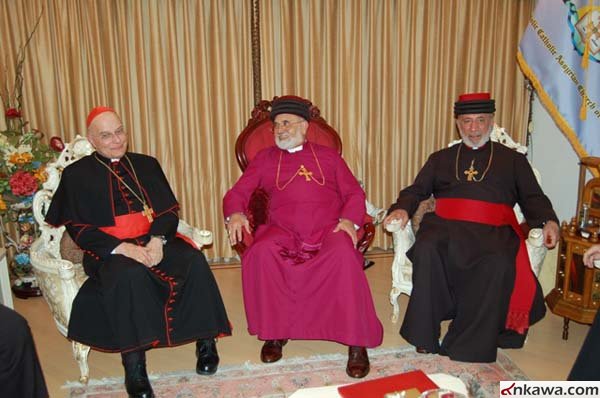
Only ten days after that proclamation the Patriarch of the Assyrian Church of the East, Mar Dinkha IV, received at the headquarters of his diocese in Chicago, along with Mar Gewarges Sliwa, bishop of Baghdad, the bishop of the Roman Catholic Church of Chicago Mgr. Francis Eugene George, with whom, according to the website Ankawa.com - the only one to report the piece of news and the photos - talked about the situation of Christians in Iraq.
It’s hard to believe that the meeting between the two prelates did not at least touch on the topic of Mar Bawai. It’s easier to think that this announcement, given through a site that has thousands of readers among Iraqi Christians at home and in the world, but of which there is no mention on sites directly linked to the Assyrian Church of the East or on that of the Catholic Archdiocese of Chicago, represents a response to the events in San Diego.
A sort of public witness of the strength of the Assyrian Church of the East that despite the loss of a bishop, priests and faithful passed through the union with the Chaldean church to that with the Catholic Church, still maintains excellent relations with it.

Chiesa Cattolica Caldea e Chiesa Assira dell'Est: pareggio?

By Baghdadhope

Continua negli Stati Uniti il confronto tra la Chiesa Cattolica Caldea e quella Assira dell'Est.
Il 9 maggio scorso la Diocesi Cattolica Caldea di San Pietro Apostolo di San Diego in California annunciò ufficialmente di aver accolto la richiesta di alcuni sacerdoti e fedeli della Chiesa Assira dell'Est della “piena comunione con la chiesa cattolica e dell’unione con la chiesa caldea attraverso il loro entrare a far parte della diocesi cattolica caldea”. Nei giorni successivi in diverse sacre cerimonie questa unione fu stigmatizzata pubblicamente dal procedere fianco a fianco di Mons. Sarhad Y. Jammo, vescovo della Diocesi caldea e di Mar Bawai Soro, il vescovo assiro che in questi anni ha guidato il movimento tendente all'unione con la chiesa cattolica ed al conseguente riconoscimento dell'autorità del Pontefice di Roma.
A distanza di soli dieci giorni da quell'annuncio il Patriarca della Chiesa Assira dell'Est, Mar Dinkha IV, ha ricevuto nella sede della sua diocesi a Chicago, insieme a Mar Gewarges Sliwa, vescovo di Baghdad, il vescovo di Chicago della Chiesa Cattolica Romana, Mons.Francis Eugene George, con il quale, secondo il sito Ankawa.com - l'unico a riportare la notizia e le foto - si è parlato della situazione dei cristiani in Iraq.
Difficile credere che l'incontro tra i due prelati non abbia almeno sfiorato l'argomento Mar Bawai. Più facile pensare che tale annuncio, dato attraverso un sito che conta migliaia di lettori tra gli iracheni cristiani in patria e nel mondo, ma di cui non vi è cenno nè sui siti direttamente legati alla Chiesa Assira dell'Est nè su quello dell'Arcidiocesi Cattolica di Chicago, rappresenti una risposta agli avvenimenti di San Diego.
Una sorta di testimonianza pubblica della forza della Chiesa Assira dell'Est che nonostante la perdita di un vescovo e dei sacerdoti e dei fedeli passati attraverso l'unione con la chiesa caldea a quella con la chiesa cattolica, intrattiene ancora con quest'ultima ottimi rapporti.

21 maggio 2008

Tareq Aziz: grave o solo senza sigarette?

By Baghdadhope

Source: AFP

Ieri, 20 maggio, si è tenuta a Baghdad la seconda udienza del processo che vede tra gli imputati per l’uccisione di 42 iracheni accusati nel 1992 di speculazione sui prezzi di alcuni generi alimentari l’ex primo ministro Tareq Aziz.
Una seduta per la quale Aziz ha dovuto rinunciare ad avere assistenza legale, una mancanza che fa dubitare della legalità del processo, ma che rappresenta una delle realtà che ancora accomunano l’Iraq del prima e del dopo Saddam Hussein perchè neanche quando Aziz faceva parte dell’elite al potere essa veniva garantita agli iracheni che fossero mai arrivati ad un processo prima di essere condannati.
Già da sabato scorso, secondo quanto riferisce la AFP, era noto infatti che il principale avvocato di Aziz, Badie Arif Ezzat, dichiarando di temere per la sua incolumità non si sarebbe recato a Baghdad, e che gli avvocati stranieri componenti il collegio di difesa: “il francese Jacques Verges, un avvocato franco-libanese e quattro italiani”, secondo quanto dichiarato dal figlio di Aziz, Ziad, non avevano ricevuto i visti dalle ambasciate di Parigi e Roma.
Solo quindi davanti alla corte Tareq Aziz si è difeso definendo il processo come nient’altro che una vendetta personale da parte di chi ora governa in Iraq e che nel 1980 tentò senza successo di ucciderlo e che ora vuole portare a termine il lavoro. Un chiaro riferimento al tentativo di assassinarlo nell’aprile del 1980 ad opera dell’Islamic Dawa Party – il partito dell’attuale Primo Ministro, Nouri al Maliki - che aveva seguito di pochissimo la decisione del regime di Saddam Hussein di condannarne a morte tutti i rappresentanti e fiancheggiatori.
Misteriose rimangono comunque le notizie riguardo alle condizioni di salute di Tareq Aziz che si è presentato in aula appoggiandosi ad un bastone. Secondo quanto riferito da AFP il figlio Ziad ha dichiarato che mercoledì scorso erano pessime, una circostanza che non può non far riflettere sulla sorte di un personaggio che, vissuto per una buona parte della vita ai vertici del potere, si trova ora a condividere quella che tantissimi iracheni hanno vissuto e vivono: una vita fatta di pressione alta, diabete e disturbi respiratori e cardiaci che renderebbero urgente un intervento chirurgico che molto probabilmente non ci sarà mai .
Ma è sempre la APF a riportare anche che sulla base di un'altra telefonata Ziad Aziz avrebbe definito "a posto" la salute di suo padre che si sarebbe però lamentato di non aver ricevuto i vestiti estivi e le sigarette che lo stesso Ziad gli ha spedito tramite la Croce Rossa all'inizio del mese di maggio.
Una circostanza certamente incresciosa che potrebbe peggiorare notevolmente la situazione del detenuto. Non si sa infatti se la cella che custodisce Aziz sia o meno refrigerata. Certamente se non lo fosse sarebbe terribile per lui affrontare la caldissima estate irachena con addosso solo vestiti invernali anche se, a dire il vero, quando il termometro tocca i 50° anche tutti gli altri iracheni che non godono di ambienti condizionati, per quanto vestiti di cotone, tendono ad essere un pò "accaldati".
Per quanto riguarda il fumo, poi, negarlo ad un iracheno è davvero un crimine anche se, visto che è lo stesso Ziad a parlare della "tosse incessante" del padre sarebbe auspicabile che si ricordasse dell'effetto fumo/tosse quando riempirà il prossimo pacco per il padre e non contribuisse a peggiorare la sua situazione polmonare compromessa da decenni di buoni sigari cubani che mai, neanche nei periodi in cui a causa dell'embargo gli iracheni avevano nulla da mangiare, sono mancati al raffinato ministro degli esteri di Saddam Hussein.